
Posts by Kelly Waltrich
Don’t Chase Arbitrary Lead Goals
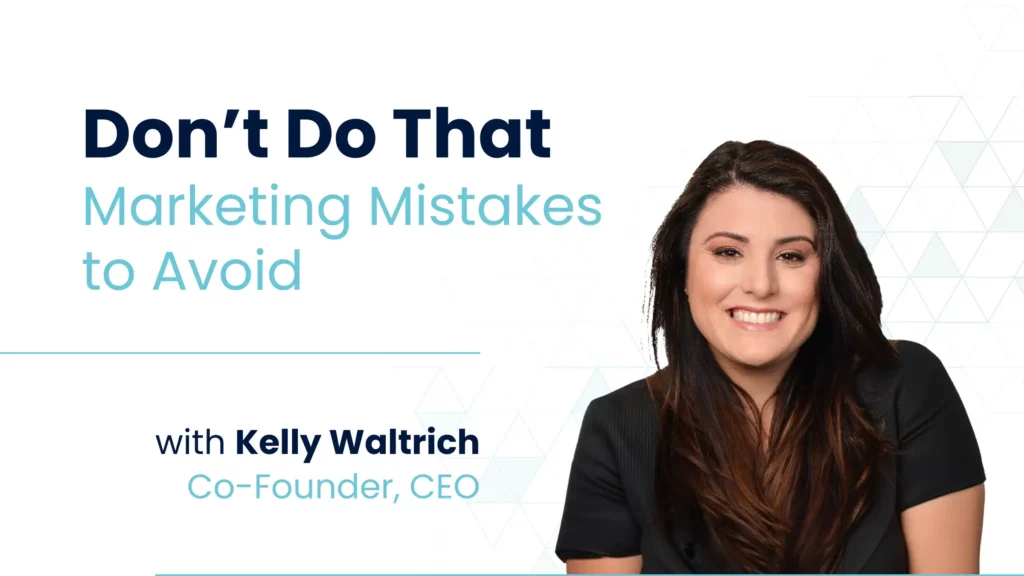
Marketing leaders, tell me if you’ve been here before: Your CEO sets an MQL lead goal of {insert absurd number here}, without giving you any context for how that number is expected to impact the business. In reality, it’s an exercise to keep your team and the sales team busy. This becomes even more apparent…
Read MoreCEOs: Set your marketing leaders up for success in 2025

As we approach the end of the year (!), I’ve spent a lot of time talking with my team and our clients about what they can do now to hit the ground running in 2025. One of the most overlooked but wildly important elements of a firm’s success is determining how leadership is going to…
Read MoreA Founders Formula for Building a Powerhouse Marketing Team: Who to Hire and When
In my role at Intention.ly, I’ve had the opportunity to help a number of firms build or optimize their in-house marketing teams, many of whom were also orchestrating outsourced work across multiple agencies. And I’ve learned there’s a distinct formula for success when it comes to the timing of who to hire in house…
Read MoreTip #3: Don’t blindly accept client acquisition costs from your marketing agency
Are you happy with what you’re paying your marketing agency for leads? For leads that convert to clients? If you answered ‘yes,’ – why? I’ve spoken with a number of prospects recently who have no problem paying what we know are exorbitantly high cost-per-lead and client acquisition costs – simply because they don’t know any…
Read MoreTip #2: Don’t try to develop a marketing strategy without data
I was talking to a firm recently that wanted feedback on their marketing strategy. But when I asked them to back into how they arrived at the strategy itself, they couldn’t tell me: ➡️ Exactly what happens to leads when they hit their CRM ➡️ How quickly prospects are moving through the pipeline ➡️ Whether…
Read MoreTip #1: Don’t hire the wrong marketer
Your marketing team – whether in house, outsourced, or some combination thereof – is arguably the single most important tool you have for driving growth at your firm. (I may be slightly biased, but I’m not wrong 😉). Which makes hiring your marketers a critical decision for the future of your business. The problem is…
Read MoreModern Marketing Strategies for Financial Services with Kelly Waltrich
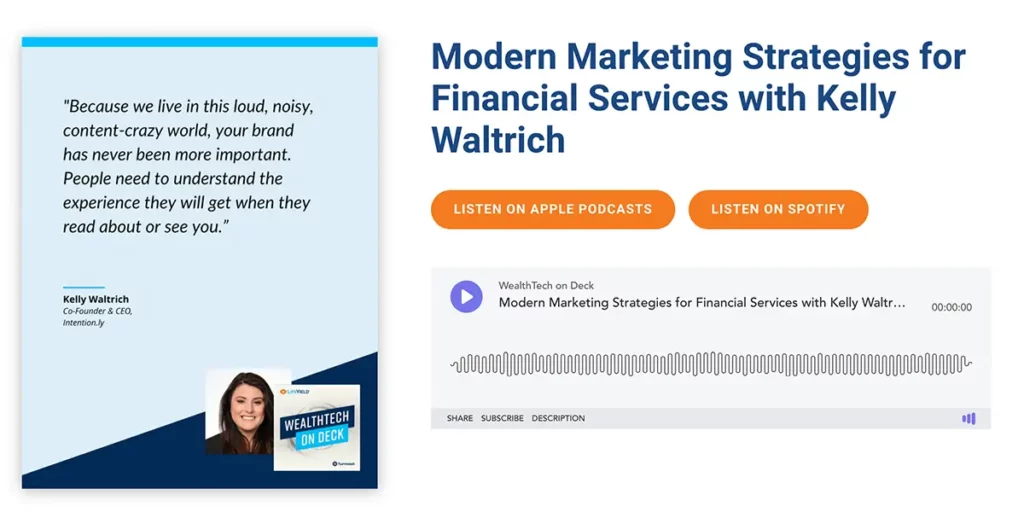
Listen to the full episode here. With digital disruptions and shifting customer expectations defining the financial landscape, achieving sustainable growth demands a strategic approach that transcends traditional marketing tactics. For forward-thinking financial services firms, the challenge lies in creating a framework that seamlessly integrates marketing and growth strategies, prioritizing brand differentiation and customer-centric value creation.…
Read MoreIntention.ly Appoints Proven Wealth Management Industry CMO Mark Forman as its Newest Client Strategy Director

Shattering Marketing Misconceptions: How to Build a Compounding Growth Engine

Over the summer, we had a client ask our team to put together a brand awareness campaign targeting a cold group of prospects. No problem, we do that all the time. The client had little to no budget for paid channels, so the bulk of our efforts were going to need to be executed organically…
Read MoreBridging the Gap Podcast Ep 143: Reshaping Financial Advice Through Marketing, Differentiation, and Technology with Kelly Waltrich
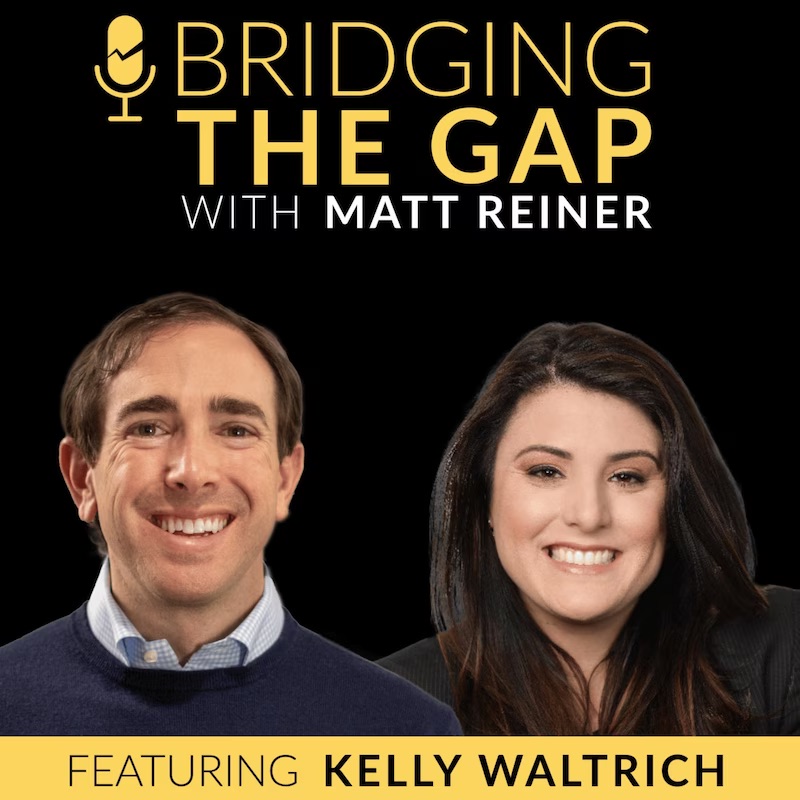
Listen to the full episode here. This week on Bridging the Gap, Matt dives into the intricate world of marketing with Kelly Waltrich, former Chief Marketing Officer at eMoney Advisor and Orion Advisor Solutions, now CEO and Co-Founder at Intention.ly, Fintech and Martech Advisor, and Inaugural WealthManagement.com’s CMO of the Year. The conversation kicks off…
Read More