Grow Intentionly, Author at Intention.ly - Page 11 of 12

If you’ve ever ordered your marketing team to “come up with a jazzy name” for something, or asked them to summarize the general value proposition of the very business you sell, you’re in the right place. 

We get it—if you’re not immersed in marketing, you may never have had a reason to think about the actual role marketing teams play in strategy, business development, and growth. It can be easy to categorize the entire department as a combination content factory/lead generation mill.  

But stop to consider that marketing teams are called upon to be customer advocates, brand defenders, product promoters, strategy drivers, and eloquent storytellers—all in a single day. Sometimes, all in a single task. 

Your marketing department does more than coin ‘jazzy’ names. They create real value for your business. Talk to them that way. 

We suggest you start by following these simple guidelines. With a few quick fixes, you’ll be on your way to winning over the marketing department in no time.

Read more…

The strength of any marketing team depends on the mindset of its leader. 

Not the most beautiful creative. Not the most emotionally compelling messaging. Not a world-class website, a robust SEO strategy, or perfectly optimized digital channels. 

Those are important tools, but ultimately, they aren’t enough.

Because more than anything, great leadership is the key to building and sustaining marketing success. An organization’s vision and philosophy—its growth mindset—comes from the top.

At intention.ly/, we know that mindset has a critical impact on the ability of marketing to drive results. And we've seen for ourselves that in order to build a powerful growth engine, leadership can't waver on these six principles:

Read more…

While adoption of modern marketing across the fintech and finserv industries has traditionally been slow, more firms are beginning to realize the powerful impact great marketing can have—not just on growth in terms of revenue, but also on talent development, company culture, client retention, and branding. 

Understanding the value of marketing is an important first step. Where many firms falter, though, is figuring out the best way to build a powerful marketing engine within their organization. Because real marketing, the kind that leads to sustainable, long-term results, is about more than a great website, email campaigns, social media ads, and content offers.

Successful marketing isn’t just the sum of tactics. It’s a strategic approach to growth that pervades every sector of your business—from aligning with the sales team on what constitutes a lead, to helping the c-suite set realistic goals, to working with product to ensure your services and solutions are meeting customers’ needs.

So where do you begin implementing or scaling marketing efforts across your organization? 

So you wrote a blog post, and now you think you’re a marketer.

 Did you…

  • Check what your competitors are saying about the same topic, product, or service?
  • Do keyword research to optimize your search engine rankings?
  • Analyze past blog performance to determine what’s resonating and what isn’t, then use that data to inform your writing?
  • Use internal and external links within your copy?
  • Make sure what you’re writing aligns with your larger brand story?


If you didn’t, you wrote a blog post. Full stop. You can’t quite call yourself a marketer yet.

Click the link below to download our eBook now and learn how to be a better marketer.

Download eBook

Digital Wealth News is pleased to bring you our “Fintech Luminaries” series – featuring thought leaders within the digital wealth ecosystems.  For our latest feature, we’d like you to meet our friend Kelly Waltrich of intention.ly/, which works with fintech and finserv companies who want to transform the trajectory of their business by building an intentionally designed marketing engine.

NAME: Kelly Kdubs Waltrich
TITLE: 
Co-founder
COMPANY: 
intention.ly/

How did you personally become involved in fintech?

I began my marketing career in financial services, and my experience runs the gamut from broker-dealers to RIAs to the wealth management division of a bank.

I loved the industry overall, but in terms of being able to really flex any marketing creativity, compliance regulations at the time were incredibly restrictive.

So when a recruiter friend of mine, Mark Constan, called me about a job opening at eMoney Advisor, a financial planning technology company, I went for it. On the day of the interview, I rode the elevator up with a man I would discover at the top floor was actually Edmond Walters, eMoney’s CEO. He offered me the job before we got out of the elevator, and I’ve never looked back. It’s been a wild ride since this moment but in terms of my career, saying yes to Edmond that day was one of the best decisions I ever made.

What does your firm do/offer within the fintech sector?

I recently made a major career change, transitioning from leading marketing at fintech firms to supporting them with my own business, intention.ly/.

intention.ly/ works to accelerate the growth efforts of some of the best, most innovative fintech and finserv firms in the space today.

From wealth management startups to established platform players to some of the industry’s biggest disruptors, we’re excited about working with businesses that aren’t just trying to repackage the same tired playbooks that already exist, but are willing to step out of their comfort zone to grow faster and more sustainably.

What is your role within your firm and what do you do there on any given

Day?

At intention.ly/, I focus on big-picture strategy with our clients: helping them set specific growth goals, analyzing their current brand positioning and building the framework to transform their marketing efforts.

My co-founder, Meghan Richter, runs the agency arm of intention.ly/ and translates that high-level strategic vision into detail-oriented execution for our clients.

What fintech leader do you admire the most and why?

To choose just one would be doing a tremendous disservice to some of the best and most innovative leaders in our space, many of whom I’ve had the opportunity to learn from over the past ten years.

I’m very grateful to have worked alongside Edmond Walters, Mike Durbin, Ed O’Brien and Eric Clarke, helping them grow two of the largest and most successful fintech firms in the industry.

And while I have no plans to publicize our current client roster, I can say that I’m very lucky to be working with a whole new wave of fintech masterminds.

If you were to personally invest in just one fintech firm (other than yours),

which one would it be and why? 

I really believe in firms that are trying to help advisors embrace the power of great marketing to acquire new clients and drive growth beyond traditional word-of-mouth referrals.

Again, it would be too hard to choose just one. That said, I love being an advisory board member for Vestorly and Bento Engine, and I’ve also been a long-time admirer of SmartAsset.


For over 15 years, intention.ly/ Co-founder Kelly Waltrich has been championing the role of marketing in the financial services industry, building powerhouse marketing teams from the ground up and developing the engines that would fuel the highest periods of growth for companies like eMoney and Orion Advisor Solutions.

intention.ly/ is the culmination of every lesson Waltrich has learned thus far in her tenure as a marketing disruptor, born from her passion and persistent belief that when it’s done right, marketing is the accelerant financial services firms need to transform their growth trajectory.


Read the original article here.

Fresh off a strong finish to 2020, Vestorly is expanding into new markets with new products with the guidance and support of industry-savvy veterans.

Vestorly, a venture-funded AI-driven Content Management Engine software company provides solutions for companies to personalize their content feeds. The company has experienced impressive growth and implementation of its intelligent content curation software by a wide spectrum of companies across diverse market verticals.

In an effort to leverage this momentum, the company has expanded and formalized its board of advisors to play a more prominent role in working with the company’s management team to facilitate additional growth.

The expanded advisory board includes Bharat Solanki Managing Director of Cambrian Consulting, David Brown SVP, Head of Strategy at Knotch, David Berkowitz Independent Marketing Consultant, Gary Kreissman Founder of GroupPRM, Kelly Waltrich CMO of Orion Advisor Solutions, Scott Knoll CEO of PCDreamscape, Stephen Langlois President of Kestra Financial, and Joel Goobich Head of Marketing and Sales at Vestorly.

“High growth technology companies often need external perspectives and insights as they  navigate through ever-changing challenges. With the breadth of experiences on our board of advisors, I am confident we will provide that” says Mr. Solanki. “Vestorly has to be commended for taking the initiative to leverage its advisors to assist in maintaining and expanding its growth momentum. I’m delighted to lead the advisory board in this effort.”

David Brown adds “The time has come to view personalization as essential to making content decisions. Vestorly is well-positioned to apply its powerful intelligent content engine to drive content personalization for organizations of all sizes and types.”

Bharat Solanki, the advisory board chairman, is currently managing director at Cambrian Consulting and has over 30 years of executive management experience with management consulting and banking firms such as Andersen Consulting and Bank of America.

David Berkowitz, creates demand generation programs for breakthrough B2B businesses with a focus on positioning, thought leadership, and business development.

Gary Kreissman, a veteran customer acquisition expert,  is the founder of performance-based, targeted customer acquisition companies that develop and promote digital marketing systems that accelerate clients’ ROI and return on time.

Kelly Waltrich, has built a foundation of expertise in marketing financial services and Fintech companies.

Scott Knoll, in his work as CEO of two companies, has been at the cutting edge of using digital data for ad purposes.

Stephen Langlois, has developed a deep understanding of business development and revenue generation in the Fintech and financial services industries in his roles as president and chief revenue officer.

Joel Goobich, a serial entrepreneur and management consultant, joined Vestorly’s executive team in mid-2020 to spearhead the company’s marketing, branding and ABM campaigns.

As personalization becomes the driving force in digital marketing, the advanced use of content has received more prominent attention. Marketers want to know what content is working and how to leverage it for better marketing ROI.

“The revolutionary capabilities of AI combined with natural language processing (NLP) has allowed Vestorly’s data-fed machine learning algorithms to deliver the right content to the right person at the right moment. Think of Vestorly like a pump delivering the specific content that is needed for different business activities,” adds Joel Goobich.

With the assistance of the advisory board, Vestorly is focused on offering its powerful content personalization API and Intelligent Content Discovery platform across the Fintech, Martech, Adtech, and other business sectors.

Read the original article here.

After nearly four years at the firm, Kelly Waltrich is leaving Orion and hinting at her own entrepreneurial endeavors.

After nearly four years of heading up marketing, Orion’s Chief Marketing Officer Kelly Waltrich has left her role at the wealthtech firm. In confirming her departure from the company, Waltrich said that under her leadership, the marketing group at Orion had grown from one individual to a team of 38, and that she had helped open the firm’s Philadelphia office. She said she would continue to serve on the advisory board of content management engine provider Vestorly, a role she began in January.

While declining to share what her next steps will be, she hinted that it could involve founding her own company. “Watching and learning from Eric Clarke has been nothing short of amazing,” she said. Her time at Orion “ignited an entrepreneurial spark in me which will become more clear with news of my next move.”

Kelly Waltrich, former CMO of Orion, smiling in a professional headshot.“I decided I was ready for a new challenge,” said Waltrich, who was named the CMO of the Year at the 2019 WealthManagement.com Industry Awards.

“We appreciate the leadership that Kelly brought to our marketing efforts for the last four years,” said Orion CEO Eric Clarke. “Her energy and drive supported Orion during what has been a high-growth era for the firm. As an organization, our marketing efforts will continue to evolve with our overall business. We believe Kelly will remain an asset to the industry in her future endeavors and we wish her well!”

Waltrich, who also worked in marketing for nearly four years at eMoney Advisor before joining Orion in 2017, is the latest of a number of high profile marketing departures in the advisory or advisory tech world over the past few months. Jud Mackrill left Carson Group in January to launch an “integration as a service” company called Milemarker. In February, Abby Salameh left Hightower after two years leading the firm’s marketing efforts.

Despite leaving her role as CMO, Waltrich won’t be far from Orion. Vestorly provides “personalized content experiences” to firms like Orion, she said.

“I’ll be sharing more about what’s next in the coming weeks,” she added.

Read the original article here.

Click here to listen to the podcast.

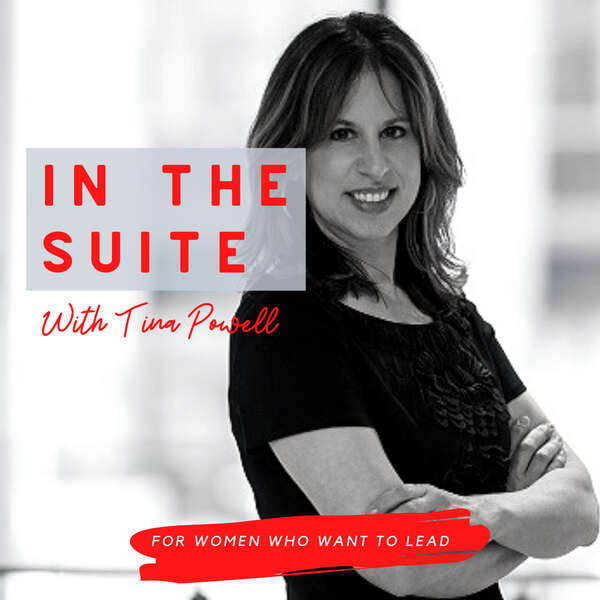
Today we’re excited to welcome Kelly Waltrich into In The Suite. There’s so much to talk about in this episode. Kelly is Chief Marketing Officer of Orion Advisor Solutions. At Orion Advisor Solutions, they help advisors find success by offering personalized financial management continuum, including advisor technology and investment solutions.

Kelly is like a butterfly. There’s art in the metamorphosis. There’s beauty in change. Kelly believes in adapting to change as it comes, which it inevitably will. Change is always looming, always near. Just be ready for it. You’ll hear Kelly talk about “change all day every day” and the conversation that made a gigantic impact on her first week at Orion.

Join the conversation to hear about:

  • Kelly beliefs about building trust with your peers  (5:55)
  • How to hire and find the right people (8:20)
  • Ways the Orion workflow has shifted since COVID (12:30)
  • Latest big news and updates at Orion (17:10)
  • Thinking about the steps of the Orion client journey (19:20)
  • Orion’s unique spin to content (24:00)
  • Hosting events in a post-COVID world (26:45)
  • Why you need to design your own career path (30:20)
  • The reason why welcoming change is so important (36:00)
  • Why we should lift each other up and build your community (43:50)
  • How a conversation changed Kelly’s life (46:10)
  • Tips on staying connected with your team and showing you care (51:40)
  • How Kelly champions her superpower every day (56:20)

I have what some might consider controversial thoughts about how we balance our work and our lives. And I can already feel my friends and coworkers staring me down, but hear me out.

At first glance, I may not be the poster child for what has traditionally passed for work-life balance: a hard and fast line between work-time and me-time. In fact, that line doesn’t exist for me. Here’s an example: My girlfriends and I have developed a little tradition of regular beach get-togethers. We’re there to catch up with each other, reminisce about when we were younger, and soak up some sun. So if they catch me fielding work calls during that time, they’re understandably annoyed. After all, I’m missing the whole point of going in the first place: to take a break from the daily grind.

Right?

Here’s the thing: I believe a good work-life balance looks different for each of us. What you consider healthy might not work for me, and vice-versa. And one major impact of the pandemic has been to open a lot of eyes to this perspective.

When I was working at the beach, I was still at the beach. That’s the beauty of work-life fluidity instead of a harsh separation between the two. Even if I was on work calls, I had the waves crashing as background noise and the stunning sunset as my view. And as soon as I closed my laptop, my friends were right there with me.

Obviously the beach-with-friends metaphor isn’t applicable to all of us right now. But what we can all relate to is that drawing that traditional, hard-and-fast line between our work and our lives isn’t so easy right now. In fact, it may not be possible at all.

Our children need attention—now more than ever, with virtual schooling and less entertainment options out of the house. Our emergency home repairs still need to be done, whether or not we’re on the clock. These things have always been true, but without physical separation between work and home, our industry is waking up to the necessity of a more fluid approach to that traditional “balance.”

And while I’ve always believed in that approach for myself, what a revelation it’s been to see it in action through the work of my team members during this time. In particular, I’m thinking about three women on my team who are also mothers. One is a single parent, watching her young daughter and working at the same time. Another has a toddler, a newborn, and a husband whose work pulls him away from home for most of the week. A third spends her days watching her two children and her nights tackling her work, while the rest of us are fast asleep.

Each one of these women is operating outside of the traditional 9-5 work day, and each one of these women is absolutely crushing it. As both a leader and a new mother navigating the best way to wear those two hats, I am in awe of these women, who don’t just straddle the line between work and life. They mold it to fit their needs, so they can best take care of their families and their jobs.

These women and others in our industry have a valuable lesson to teach us—both myself as a leader, and businesses as a whole. This isn’t a call for being available 24 hours a day, answering emails at 3 a.m. Nor is it a suggestion that all companies can operate with and offer their employees this same level of flexibility. But what we have right now, thanks to the changes brought on by the COVID-19 pandemic, is an opportunity.

The massive shift to remote work has given my company—and on a smaller scale, my team—the chance to re-evaluate the way we work best, both individually and as a whole. It’s a chance we might never have had if the shelter-in-place orders hadn’t gone into effect, and we would be doing ourselves an incredible disservice not to take it.

Think about it this way: the rock star graphic designer mom on my team, working out of her children’s nursery during naps and between feedings? She wouldn’t be able to be on my team at all if we strictly enforced a 9-5 onsite workday. And I can say with certainty we’re better for having her. If we weren’t willing to re-paint a picture of how our world works and how we want to help our employees shine, we would be the ones missing out on amazing people and amazing opportunities.

It’s the same idea across the board: incredible talent might not fit into a rigid, 100% onsite work day or work week. Is it worth losing that talent to adhere to a strict schedule, if you have the luxury to be flexible?

At my company, we’re seizing this opportunity to show empathy to our employees, to listen to them, and, perhaps most importantly, to build trust and transparency across our organization. For my marketing team, that means turning our office into a collaboration lab—a place to go in and think and be creative, not a place to be tethered to a desk for eight hours. It means designated no-meeting days, so we can focus on creating without interruption. And it means continuing to find new ways to connect with each other, even if we aren’t physically together.

The pandemic is going to end. And when it does, it will be the companies that used this disruption as a catalyst to think progressively about the future that will thrive. This is the time to make the most of the change around us. Don’t let this moment pass you by without thinking about the doors we could open with a more flexible approach to our businesses and our coworkers.

Read the original article here.